Accessible payments for all
At Ingenico, we believe every customer deserves a secure, seamless, and inclusive payment experience. Our solutions are thoughtfully designed to support users with disabilities—ensuring accessibility without compromise.
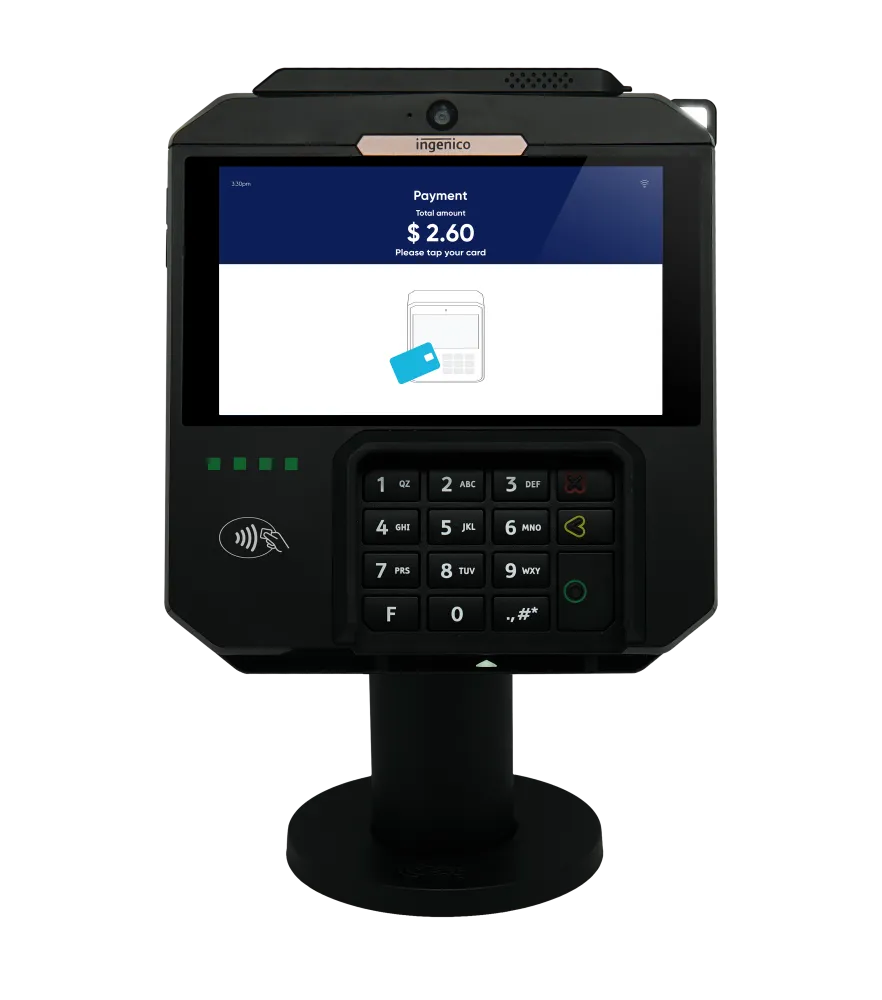
Designed with Accessibility in mind
Ingenico terminals integrate tactile and visual features that making them easy to use for people of all abilities:
- Tactile keypads with raised dots and embossed markers
- High-contrast displays with large, readable fonts
- LED indicators that clearly show where to insert, tap, or swipe cards
- Marked contactless zones for intuitive interaction
- Optional accessories for PIN entry and audio instructions
From the moment a transaction begins, users can confidently interact with the terminal—without assistance.
Accessibility Mode: enabling self-service confidence
We go further with a full Accessibility Mode tailored to the needs of visually impaired users
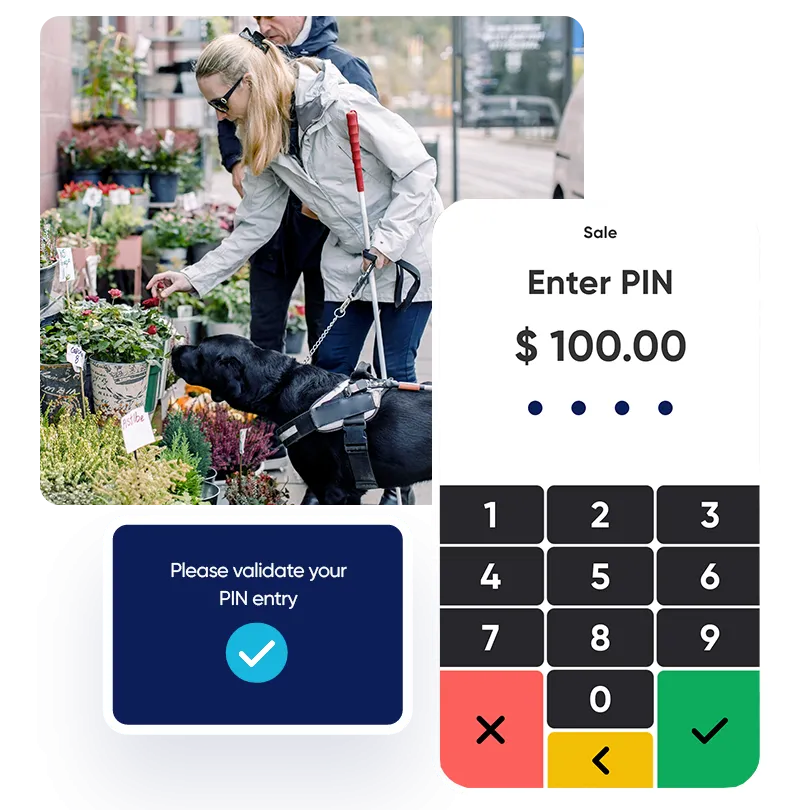
- Audio guidance via Text-to-Speech prompts in local languages
- Automatic activation when a headset is plugged in—or manual trigger via gesture
- Simplified UI with large text, high contrast, and fewer steps
- Audio-assisted PIN entry with enlarged keypad and double-tap confirmation
The experience is private, secure, and fully guided—from start to finish.

Enjoy a more personalized experience by accepting our cookies and unlocking targeted content.
Enable Cookies

Committed to compliance
Ingenico solutions are built to meet the European Accessibility Act (EAA) requirements—today and tomorrow.
We don’t retrofit accessibility. We design for it.
With embedded hardware features and advanced software capabilities, we help you deliver a compliant and inclusive experience—without complexity.
Frequently Asked Questions
Accessibility means that payment terminals can be used by everyone, including people with disabilities - whether physical, mental, intellectual, or sensory - regardless of whether the disability is permanent or temporary.
Accessibility ensures that everyone, regardless of ability, can make payments independently, easily, and securely. It’s a matter of inclusion, respect, and equal rights for all customers.
This depends on your location and local regulations. In the EU, for example, the European Accessibility Act (EAA) will require accessible payment terminals for all products placed on the market after 28th June 2025. It's advisable to check national implementation timelines and plan accordingly.
While accessibility of payment terminals is a global concern, it depends on location and local regulations. The legislative impact is particularly strong in North America and Europe (United States, Canada, EU Member States, United Kingdom). Regulations on this topic are also evolving in countries such as Brazil, Australia, New Zealand, Japan, and Singapore.
In the EU, for example, the European Accessibility Act (EAA) will require accessible payment terminals for all products placed on the market after 28th June 2025. It's advisable to check national implementation timelines and plan accordingly.
At Ingenico, accessibility is integrated from the design phase of new products-both in hardware and software.
We follow a global approach to meet accessibility requirements regardless of the market destination.
We collaborate with user associations to understand real needs and gather feedback from people with disabilities.
We also participate in workshops and working groups to help develop universal, harmonized solutions that deliver a consistent user experience.
Payment terminals should communicate information through multiple sensory channels.
Accessibility features may involve both hardware and software adaptations, including:
- Audio output of on-screen information and instructions
- High-contrast display options and scalable text
- Tactile, easy-to-identify keys with embossed markings
- Adapted selection and entry method for full touch devices

Find a local Reseller
Find a local reseller, distributor right for you, who understands your unique business and industry needs.

Бажаєте поставити питання або залишити відгук?
Перейдіть за посиланням нижче, щоб відправити нам повідомлення. Ми відповімо в найкоротші терміни.