Why Retailers Need Android Payment Terminals for Continuous Innovation
Listen to this article
Android payment terminals give retailers the agility they need to survive in a rapidly changing industry. By supporting the full range of payment methods, business applications, mobile commerce, and smart estate management, Android platforms help retailers respond to change, protect technology investments, and continuously innovate without replacing payment infrastructure.
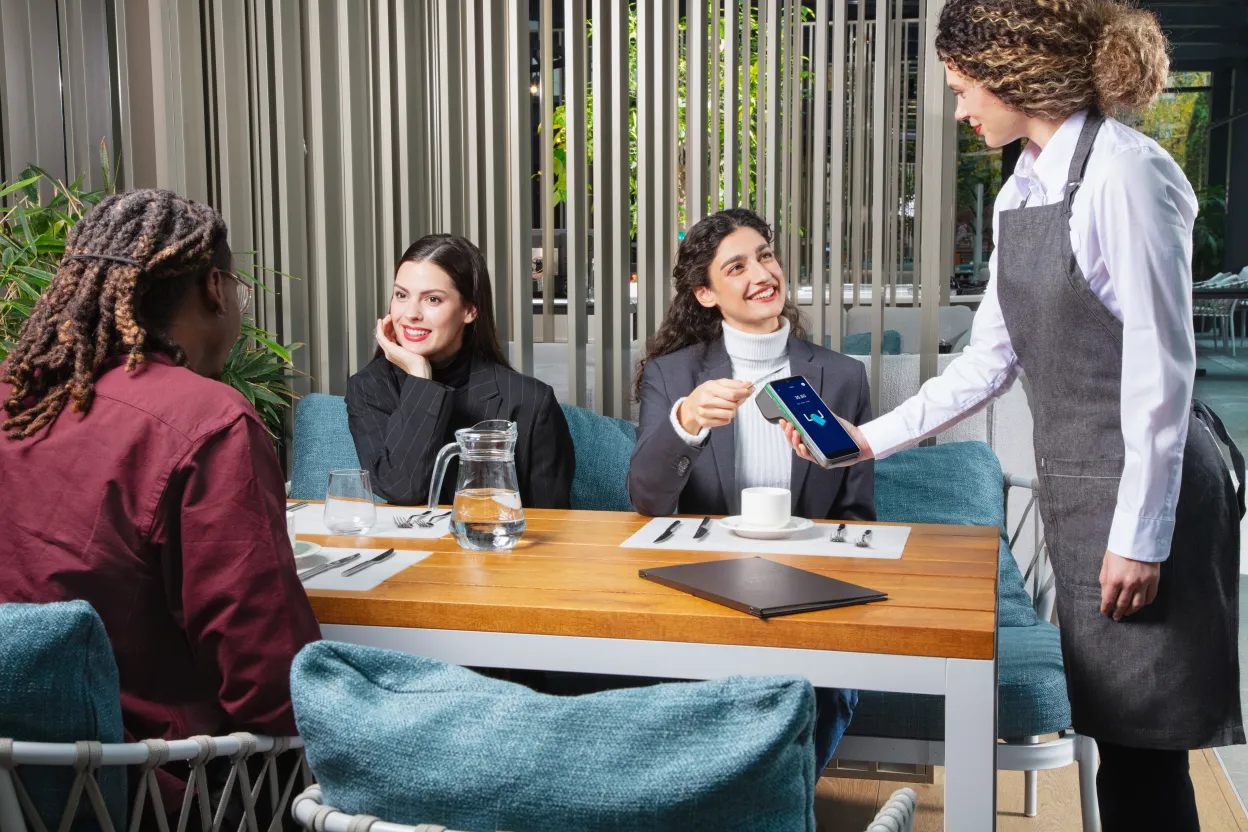
Android payment terminals are filling a crucial need in retail. The industry, in the middle of a fast and decisive transformation, needs technology that can adapt as consumer behaviors, operations, and competitive pressures change. After research for Deloitte’s 2026 Retail Industry Global Outlook and an account of all the changes in the industry, analysts concluded that retailers have reached the point where adaptability is now a key to sustained business success. The latest generation of Android payment terminals gives retailers the ability to change or expand capabilities at the point of sale without a technology refresh.
How Android Payment Terminals Give Retailers Agility in an Era of Change
Unlike legacy payment technology platforms, Android point of sale (POS) technology eliminates barriers to innovation. Android payment terminals give retailers new options for managing transactions, engaging customers, and increasing operational efficiency. With Android-based systems, retailers can:
Accept Any Payment Method
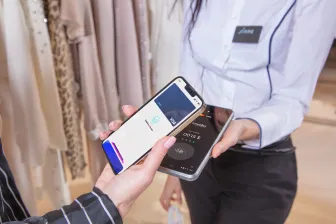
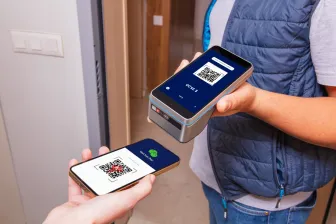
A next-generation Android payment platform allows retailers to expand the number of payment methods they accept. The list is far beyond credit, debit, contactless, or mobile wallet payments. Android payment terminals can run applications that allow customers to use payment apps, QR code payments, services like buy now, pay later (BNPL), biometric payments, or stablecoin payments. Although there is no sure way to predict whether emerging payment methods will go mainstream, Deloitte analysts are looking for stablecoin payments to drive more than $200 billion in U.S. retail payments by 2030, and Fortune Business Insights predicts the global biometric payments market will increase from $13.48 billion in 2026 to $44.69 billion in 2034. If that demand materializes, Android payment terminals can adapt to allow retailers to adapt to accommodate it, not require retailers to rip and replace their payment technology.
Run Business Applications on the Terminal
Android also allows retailers to run business applications, like loyalty software, inventory management, digital receipts, and customer engagement tools directly on payment terminals. While this increases the value that a retailer gets from a payment terminal investment, it also gives retailers the power to blend elements of the checkout into a single flow, like crediting a customer with rewards or allowing them to redeem them, checking ID for restricted purchases, or instantly sending a digital receipt to a customer by text or email. Android allows retailers to remove friction from transactions and to revise those flows if technology, operations, or customer preferences change.
Meet Customers Where They Are
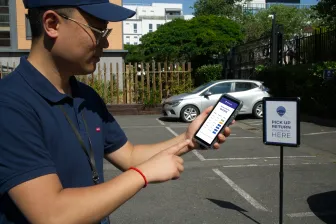
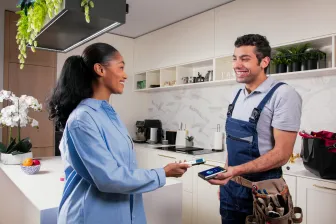
With next-generation Android payment terminals, retailers can provide customer services anywhere throughout the store, outside, or even in a remote shop or during a home delivery. Compact, mobile Android devices give sales associates access to the same data and functionality as a countertop terminal, allowing them to accept the customer’s preferred payment method and personalize service. An Android payment platform that supports SoftPOS can even allow retailers to download an app on company devices used for other purposes, such as route management or communications, and accept contactless payments directly on the device, with no separate card reader required. Regardless of where customers want service (or may want it in the future) Android payment terminals give retailers options to efficiently and consistently meet their demands.
Deliver Better Merchant and Consumer Experience
Next-generation Android payment terminals enable a modern touch interface, rich graphical experience, cameras for interactivity and data capture, and app-based workflows. These features allow merchants to deliver more intuitive and engaging checkout experiences. Additionally, Android terminals can integrate more easily with the merchant’s POS system, commerce platforms, loyalty software, enterprise resource planning (ERP) system, and cloud services through application programming interfaces (APIs), making the payment terminal a connected part of the merchant’s digital infrastructure.
Simplify Estate Management
An Android platform not only gives retailers more options for payments innovation, but it also gives them a better way to manage payment devices. A next-generation Android platform that supports flexible, extensible Android POS terminals can also make it easy to manage them. Retailers can use the platform to centralize software deployment, manage hardware, troubleshoot remotely, and access new apps, features, and services. A next-generation Android payment platform is also designed to accommodate new technologies without requiring a technology change, which was often the case with proprietary payment systems.
Create a Foundation for AI at the Edge
Next-generation Android terminals include sufficient computing capabilities to run AI-powered features directly on the devices. This gives merchants the opportunity to add advanced capabilities to their payment terminals, such as guided setup and troubleshooting, predictive maintenance, on-device anomaly detect, and AI assistants. With AI at the edge, devices can become smart POS terminals that optimize user experiences and help keep data safe.
How the Retail Landscape Could Change
While many retailers are working to modernize their technology and operations after whirlwind changes since 2020, it’s impossible not to acknowledge (and even brace for) changes that lie ahead. Total Retail sees the industry trending toward experiential stores that offer immersive and multisensory experiences. Shopping will become more of a destination than a task, and transactions will become more frictionless so that they don’t interrupt those experiences. The World Economic Forum advises retailers to educate themselves and explore how AI will reshape retail, from personalizing customer interactions to increasing operational efficiency by leveraging AI-driven analytics and AI agents. Consumers are also embracing subscriptions and giving their loyalty to retailers that can reliably fill set-it-and-forget-it orders for the essentials. Yahoo! Finance reports that this market could double from about $739 billion in 2026 to $1,440 billion by 2030.
Those predictions may manifest in a few years. However, as the 2020s have proven time and again, circumstances, consumer behaviors, and the industry’s response to them can, and do, change. The only practical payment technology deployment strategy is one that allows retailers to adapt. Next-generation Android payment terminals remove limits on checkout and customer service functionality that retailers need today and that they will need to add tomorrow. They are the future-proof approach to payment device implementations.
Ingenico’s Solution to the Need for Continuous Innovation
Ingenico’s Next-Gen AXIUM line is a family of Android-powered smart POS terminals with a common architecture that cover the full spectrum of applications, from countertop, multilane, and mobile implementations. They’re designed for long life, running on Android 14 and field upgradable when new versions are available. They’re also certified to Payment Card Industry PIN Transaction Security (PCI PTS v7), the latest standard for card transaction security, and they’re AI-ready and capable of supporting all payment methods. Supported by the cloud-based Ingenico 360 payment estate lifecycle management platform, these Android payment terminals deliver reliability, security, and performance.
As a leader in payment technology for over 40 years, Ingenico is committed to developing and bringing solutions to market that help retailers meet consumer expectations for payment experiences and operate efficiently. To learn more about Android payment terminals designed for today’s retail demand and that enable continuous innovation, contact our team.
FAQs
Next-Gen AXIUM is Ingenico's latest Android-based payment platform, designed to help businesses, banks, and acquirers adapt to the evolving payments landscape. Built on a unified architecture and powered by Android 14, it provides a future-ready foundation for payment acceptance across a broad portfolio of devices.
Its unified architecture, Android platform evolution, remote upgrade capabilities, PCI PTS v7 compliance, AI-ready design, and centralized management approach help organizations adapt to future payment requirements while maximizing device longevity.
The Android AXIUM payment terminals operate independently and do not require a tablet to function. Powered by the Android operating system, these devices come with their own built-in touchscreen, processing capabilities, and connectivity options. They allow merchants to run payment applications and additional business apps directly on the terminal itself. This means that businesses can manage payments, customer interactions, and even other business functionalities without the need for an external tablet or device.
Android‑powered Ingenico terminals (AXIUM Android) are managed through Ingenico 360, a cloud‑based estate‑management platform that gives you a single pane of glass for thousands of devices. It centralises onboarding, configuration and software updates, provides real‑time health dashboards, remote diagnostics and remote‑desktop access, and lets you enforce policies (MDM, geofencing, access controls) across the whole fleet. Because the terminals run a uniform Android OS, updates and new business apps can be pushed instantly to every device, eliminating manual installs and reducing downtime, which dramatically simplifies large‑scale estate operations.
Ingenico terminals support a broad range of Alternative Payment Methods (APMs), providing businesses with flexible and secure payment options. These include popular digital wallets such as Apple Pay, Google Pay, and Samsung Pay, as well as QR code payments through services like Alipay and WeChat Pay. Ingenico also enables the acceptance of Buy Now Pay Later (BNPL) solutions, including Klarna and Afterpay, offering customers greater flexibility in payment options. Additionally, Tap to Phone functionality allows businesses to use smartphones as point-of-sale terminals. Ingenico terminals also support a variety of local payment methods depending on the region. With this comprehensive support for APMs, Ingenico helps businesses cater to diverse customer preferences and enhance the payment experience.
Contact us to learn more.