What’s a Smart Payment Terminal and Why Do Retailers Need Them?
Listen to this article
Smart payment terminals are designed for a modern checkout experience. They consolidate point of sale (POS), payments, and business applications into one device, saving time for the IT team and helping to keep costs low. They also give sales associates and cashiers access to more features and functions so that they can tailor experiences to each customer. Merchants evaluating smart payment terminals should consider the breadth of the vendor’s portfolio and the quality of customer support and service to make the best smart payment terminal choices.
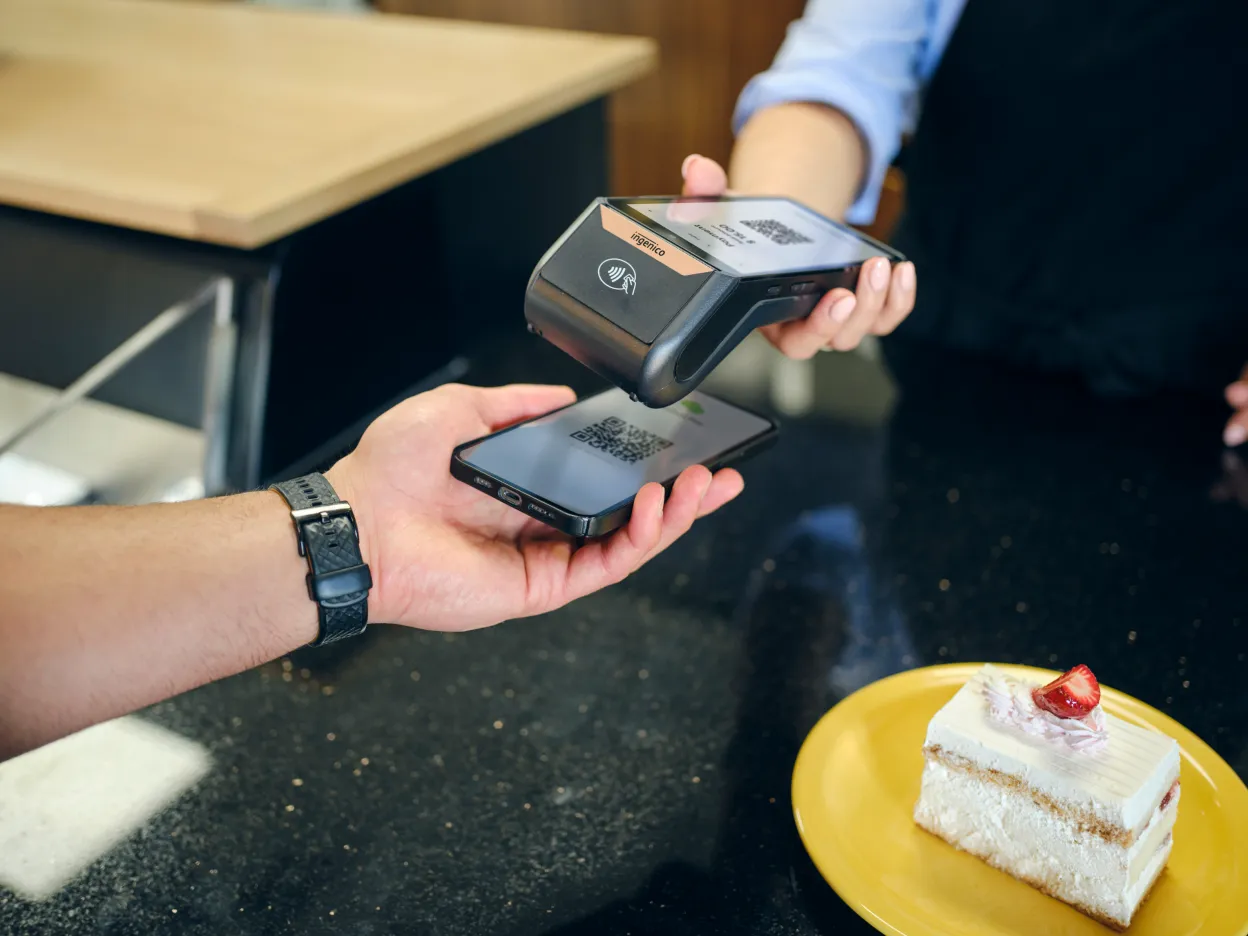
Smart terminals are changing the experience and the IT footprint at the checkout. Payment terminals are essential for accepting digital payments, and, traditionally, they have been separate devices, even if they were built inside a point of sale (POS) system enclosure. Furthermore, these devices did one thing, accepting payments securely, and did it well. But now, smart payment terminals take transactions to a new level with advanced features and capabilities.
What is a Smart Payment Terminal?
A smart payment terminal is a device that does more than allow a merchant to accept card payments. Typically running on an Android-based system, a smart payment terminal can give merchants the ability to give customers the convenience of using a wide range of payment methods, including alternative payments. It also gives merchants the option to use the terminal to run business applications, such as inventory management, employee time and attendance, and loyalty rewards programs. Leading solutions also allow merchants or their solutions providers to monitor payment device health and performance and manage them remotely.
|
|
Card Processing |
Contactless Payments with NFC |
Alternative Payment Acceptance |
Runs Business Application |
Management Capabilities |
|---|---|---|---|---|---|
|
Legacy Payment Terminals |
Secure and efficient transactions |
Contactless cards, mobile wallets, wearables |
Can be configured to accept ACH, EBT |
Requires extensive customizations |
Limited |
|
Smart Payment Terminals |
Secure and efficient transactions |
Contactless cards, mobile wallets, wearables |
Can accept the full range of alternative payments |
Able to run business applications |
Advanced |
How Do Smart Payment Terminals Modernize Operations?
A smart device, particularly a purpose-built Android payment terminal, has the power and functionality to handle a transaction from start to finish. One device with a large, user-friendly screen consolidates steps in checkout processes, while saving counter space. It replaces multiple devices for POS software and payments with a single device and a clean, updated look.
But smart payment terminals are more than a pretty new face for the checkout. They give merchants the flexibility to run their businesses more efficiently. These devices can automate inventory management, updating stock counts in real time and giving employees on-demand access to item quantities. Smart payment terminals can also support digital receipts for a more sustainable operation. Overall, they allow merchants to make the best use of the computing power inside the device to run a more efficient business.
How Can Smart Payment Terminals Impact Customer Experiences?
Smart payment terminals have more features and functionality than traditional payment devices, so they empower merchants to tailor checkout experiences to each customer’s needs. A smart terminal has the potential to accept any payment method, from a physical credit or debit card to buy now, pay later (BNPL) or a stable coin payment. Because a smart payment terminal can run business applications, merchants can even create seamless flows that combine payments, loyalty rewards, and personalized offers.
How Can Smart Payment Terminals Save Businesses Money?
Through the payment technology company’s ecosystem of partners, a smart payment terminal can allow merchants to choose from business applications on an app store. This collection of apps is fully integrated with the platform that runs the terminals, and the provider ensures that they’re updated and maintained. These apps are often offered at a lower cost than if the merchant purchased and maintained them separately.
Why Do Smart Payment Terminals Save Time for the IT Team?
A single terminal that runs POS, payments, and business applications minimizes device inventory so the IT team has fewer devices to track, update, and maintain. However, the benefits for the IT team go beyond consolidating functions into one device.
The best solutions include a payment terminal management system that makes managing a payment device estate easier. They enable remote key injection, streamlining deployment, and pushing updates to firmware and the applications the terminals are running. The platform’s management capabilities include performing health checks so IT can catch and correct issues before they lead to downtime. And if a need for device maintenance pops up, leading platforms give technicians the option to control screens with the merchant’s permission, saving time and decreasing frustration for store staff troubleshooting the problem.
Which Features Should Merchants Look for in a Smart Payment Terminal?
When comparing smart payment terminals, merchants should include these factors in their evaluation:
-
Device Portfolio: To create the best possible customer experiences, merchants may accept payments at a counter, in the aisles, tableside in a restaurant, or at a self-checkout kiosk. The merchant will benefit from standardizing on one line of terminals that address each need and run on the same platform.
-
Processor Choice: Terminals that merchants can use with the acquirer/payment processor of their choice ensure they can control fees and the capabilities they need.
-
PCI DSS-Compliant and EMV-Certified: Smart payment terminals must comply with the latest standards and regulations.
-
Future-Ready Devices: The smart payment terminal platform should have the ability to support emerging technologies, like biometric payments or cryptocurrency payments.
-
Customer Support: Research the provider’s track record with support and customer satisfaction to make your choice with confidence that it will be a positive, long-term relationship.
Make the Smart Move
Smart payment terminals give merchants the power to do more at the checkout to modernize their operations, enhance customer experiences, save money on business applications, and save time for the IT team. Ingenico’s AXIUM Android payment terminals are designed to deliver it all, securely, compliantly, and backed by unparalleled customer service and support. Are you ready to upgrade to smart payment terminals? Contact us.
FAQs
A smart payment terminal is a compact, rugged, connected device that goes beyond basic card‑reading. It accepts contactless cards and QR‑code payments, runs an intelligent operating system that can host apps and services, offers a color touchscreen and modular add‑ons for flexible configurations, delivers PCI‑PTS v6 security (e.g., PIN‑on‑Glass) and easy integration with back‑office systems, and is designed for self‑service, indoor or outdoor deployments such as vending, kiosks or retail counters.
A smart payment terminal combines a modern Android operating system, an app ecosystem, advanced connectivity (Wi‑Fi, Bluetooth, LTE, QR‑camera), higher‑grade security (PCI PTS v6), and modular hardware that can be remotely managed and updated. A traditional terminal relies on a closed, proprietary OS, limited connectivity, fewer payment options, and static hardware—making it less flexible for today’s omnichannel and self‑service scenarios.
Smart payment terminals combine easy‑to‑use interfaces, universal payment options, built‑in accessibility, and continuous security updates. They let merchants deliver faster, frictionless, and inclusive checkout experiences—whether at a staffed counter or an unattended kiosk—while also enabling value‑added services that turn a simple payment into a richer, more engaging customer interaction.
Smart payment terminals cut operating costs in powerful ways, with less hardware to buy and replace, cloud‑based device management (fewer on‑site service calls, faster updates, and streamlined fleet oversight), and faster, more flexible payment flows (reduced staff time per transaction and lower energy/maintenance overhead).