2026 Retail Trends: Taking What Works and Making it Better
Listen to this article

The course that retail set toward more convenient, personalized shopping continues. However, as 2026 approaches, retailers are using mobile, payment, and advanced technologies, like AI and AR/VR, to refine their strategies and deliver experiences that meet or exceed consumer expectations.
Retail Trends We Predict Will Make Big Impacts in 2026:
- How mPOS Empowers Sales Associates to Elevate Service
- How Retailers Leverage Payments to Enhance CX
- Why Advanced Technology is Essential to Phygital Retail
- How Can Operators Keep Up with Retail Trends
Consumers’ positive responses to mobile point of sale (mPOS) vs. the checkout counter, trending and emerging payment methods, and phygital retail have confirmed that retailers are on the right path. But retail trends indicate that in 2026, businesses are going to take these successful technology implementations and make them even more of an advantage.
How mPOS Empowers Sales Associates to Elevate Service
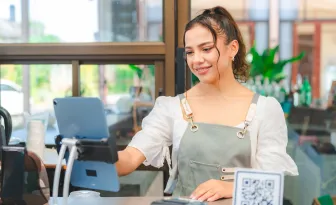
For the last decade, retailers have prioritized meeting customers where they are. Sending shoppers to a checkout counter after they’ve interacted with a sales associate has become a disjointed, outdated concept in a world where digital engagement is easy, fast, and personalized. Expect to see retailers focus on enhancing on-the-spot experiences with mPOS.
Equipping sales associates with mPOS allows them to meet customer expectations for product and inventory data access, fast transactions, and instant gratification. However, retailers know mPOS does more than improve customer experiences. It can also help them operate more efficiently. With easy access to the tools they need through mPOS, sales associates can streamline their workflows, eliminate bottlenecks and wait times, and provide service to more customers.
The benefits of mPOS are driving growth in the U.S. and around the world. According to Grand View Research (GVR), the global market, valued at $36.07 billion in 2022, is increasing at an 11.1% CAGR to reach $85.11 billion from 2023 to 2030. GVR expects North America to dominate the market due to demand from the retail and restaurant industries.
How Retailers Leverage Payments to Enhance CX
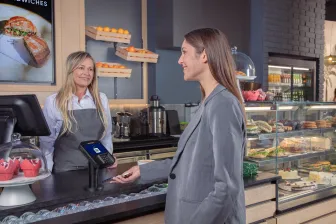
Retailers have long moved far beyond “cash or credit” as options at the point of sale. But with the right payment technology, retailers can give their customers a wider range of options. Leading retailers accept contactless payments, which Payroc reports 71% of consumers now prefer over traditional payment methods. That’s an increase of 62% from just three years ago.
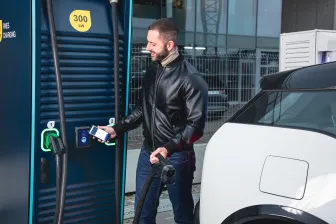
What will change in 2026 is how and where retailers accept tap-to-pay payments. Retailers are exploring the value of SoftPOS, which allows retailers to accept contactless payments on commercial-off-the-shelf (COTS) devices. A sales associate inside or outside the store can use a tablet, handheld computer, or smartphone to accept contactless payments, with no additional device required. It’s an easy, cost-effective way to accept contactless payments in more places inside and outside the store. It also gives retailers a way to accept secure payments if a network disruption occurs.
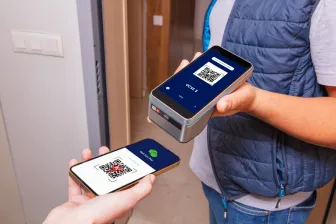
Retailers can also partner with future-thinking payment technology providers to expand payment acceptance with alternative payments. Leading retail payment solutions provide stores with Android terminals that let them take buy now, pay later (BNPL), payment apps, stablecoin, and electronic benefit payments with a quick QR code scan.
Retailers need to remember payment choice matters. A Bread Financial study found that 90% of consumers say it’s important that a retailer accept the payment method they prefer, and 67% say they’ve shopped with a retailer specifically because they accept their preferred payment type. Additionally, 78% say they’ve spent more because their ability to pay the way they choose has made purchases more attainable.
Why Advanced Technology is Essential to Phygital Retail
Consumers love the speed, convenience, and personalization of engaging with retailers digitally. However, at times they also want the option to see, touch, and try products before they buy, take their purchases home immediately, and enjoy the social experience of in-store shopping. A phygital retail strategy combines the best of both the physical and digital worlds.
Phygital includes bringing digital experiences to in-store shopping. Physical stores can implement technology that helps recognize consumers and personalize their experiences. AI can use data from all channels to optimize shopping for individual customers, such as remembering what’s in the shopper’s online cart and directing them to complementary products in the store. Stores can also delight apparel shoppers with AR/VR-enhanced fitting rooms that allow them to “try on” clothing or AR tools that let them see what furniture would look like in their homes.
Retailers can also remove payment friction in a phygital environment, remembering the customer’s preferences from previous transactions, such as payment method and preferred language.
How Can Operators Keep Up with Retail Trends?
Today’s retail technology implementations need to be future-proof, giving retailers the agility to adapt as the industry and consumer behaviors evolve. A smart strategy is to begin with advanced, Android-based payment technology that allows retailers to accept the full range of payment types and even run business applications on payment devices. This approach gives retailers a platform that supports mPOS, loyalty-building payment experiences, and a phygital retail environment.
Contact us to learn more about AXIUM Retail Core, which delivers what retailers need for best-in-class commerce in addition to optimal performance and strong security.